

Marcos Must Choose: Replace Tiu-Laurel or Change His Agriculture Policy
Philippine agricultural imports continue to outpace exports. Marcos must decide whether to replace Agriculture Secretary Tiu-Laurel or change the country's agricultural policy.

President Ferdinand Marcos Jr. must confront an uncomfortable question about his administration’s agricultural policy: after placing Agriculture Secretary Francisco Tiu-Laurel Jr. in charge of one of the country’s most critical sectors, is the Philippines becoming more self-sufficient—or increasingly dependent on imported food?
The numbers raise serious questions.
In 2025, Philippine agricultural imports reached approximately US$20.37 billion, while agricultural exports amounted to only US$9.25 billion. Imports accounted for 68.8 percent of the country’s agricultural trade. The previous year, imports had already reached US$19.46 billion, against exports of US$7.75 billion. These figures point to a widening imbalance in agricultural trade.
To be clear, imports exceeding exports do not automatically mean that imported agricultural products exceed the country's entire domestic production. Exports represent only the portion of local production sold abroad. But the figures do reveal how heavily the country relies on foreign agricultural supply—and how much money leaves the country to meet domestic demand.
This is particularly troubling when set against the administration’s stated objective of strengthening local agriculture and reducing dependence on imports.
The problem is not that the Philippines imports food. Imports are necessary when domestic production cannot meet demand, when shortages occur, or when prices become unaffordable. The problem arises when importation becomes a substitute for building domestic productive capacity.
Import substitution, properly understood, means developing local industries and production so that goods previously sourced abroad can eventually be supplied competitively at home. It does not mean simply restricting imports, imposing safeguards, or managing the entry of foreign products. Without improvements in productivity, infrastructure, technology, financing, storage and distribution, restricting imports can raise prices without necessarily helping farmers produce more.
The country's agricultural performance should give policymakers pause. The OECD reported that Philippine agricultural production grew by an average of just 0.1 percent annually between 2014 and 2023, while total factor productivity declined by 0.5 percent annually. These are structural weaknesses that cannot be solved through import restrictions alone.
The consequences are felt on both sides of the agricultural market. Consumers need affordable and reliable food supplies. Farmers and agricultural businesses need predictable prices, fair market access and an environment in which local production can compete. Importation at the wrong time or under poorly designed policies can undermine farmgate prices, while excessive dependence on foreign supply exposes consumers to international price movements, currency fluctuations and disruptions in global trade.
Marcos therefore faces a choice. He can replace Tiu-Laurel if he believes the Department of Agriculture needs different leadership, or he can retain the Secretary but fundamentally change the policy direction.
What he cannot afford is to mistake the management of imports for the development of agriculture.
The measure of success should not be how effectively the government controls the arrival of foreign agricultural products. It should be whether Filipino farmers can produce more, earn better incomes, compete fairly and supply a greater share of the food consumed by Filipinos.
If the country continues to spend more on imported agricultural products while domestic production remains weak, then the administration must ask whether its strategy is actually delivering food security.
And if it is not, the President must be willing to change either the leadership or the policy—or both.
Comments
0Sign in to join the conversation.
Loading comments
Older posts
 Opinion
The Consequences of a Sara Duterte Conviction: A Warning to whom?
Sara Duterte warns of consequences if convicted by the Senate impeachment court. With her popularity declining, the approaching December verdict raises questions about accountability and political stability.
The price of rice is a political choice
Every administration promises cheaper rice. The gap between the promise and the price is where policy actually lives.
 Opinion
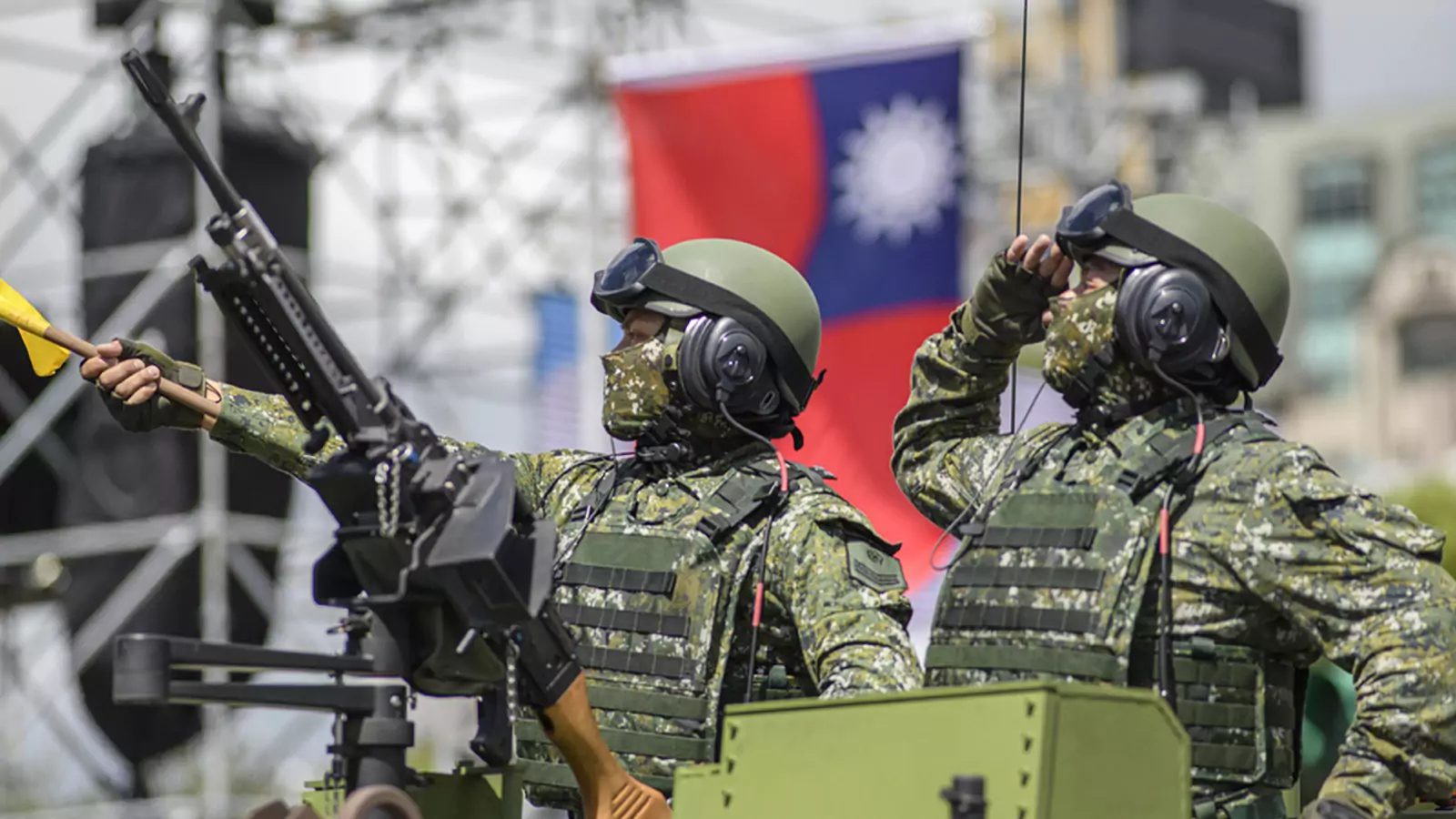
Beyond the 2027 Invasion Timeline: Diplomatic Isolation, Ontological Security, and the Politics of Taiwan’s Reunification
This paper challenges military-centered assessments of a possible People’s Republic of China (PRC) operation against Taiwan by 2027, arguing that Beijing’s calculations may depend not only on military readiness and economic costs but also on diplomatic recognition, international legitimacy, and political identity. It advances a conditional framework integrating ontological security theory, the Chinese sociological concept of mianzi (face), and recognition politics. The paper proposes that Taiwan’s declining diplomatic recognition could strengthen Beijing’s sovereignty narrative, create a perceived loss of face for Taiwan’s governing authorities, and alter the political conditions under which Beijing considers coercive or military unification. Drawing on official PRC statements, U.S. security assessments, and international relations scholarship, the analysis develops three propositions concerning recognition, status vulnerability, and coercive decision-making. It argues that complete diplomatic isolation could represent a significant political threshold without necessarily eliminating Taiwan’s international relationships or legitimizing the use of force. The paper contributes to cross-strait security studies by identifying diplomatic recognition as a potentially important condition that shapes Beijing’s assessment of the political feasibility and costs of unification, beyond conventional materialist explanations.